

Abstract: Western societies built on centuries of selection for trust, rule-following, and universalism have become uniquely vulnerable to exploitation, collapse, and institutional capture in the globalist era. This is not an accident but a structural outcome of gene–culture coevolution, incentive mismatches, demographic feedback loops, and meta-vulnerabilities created by blank slate denial and moral signaling.
I. Evolutionary Foundations and Trait Distributions
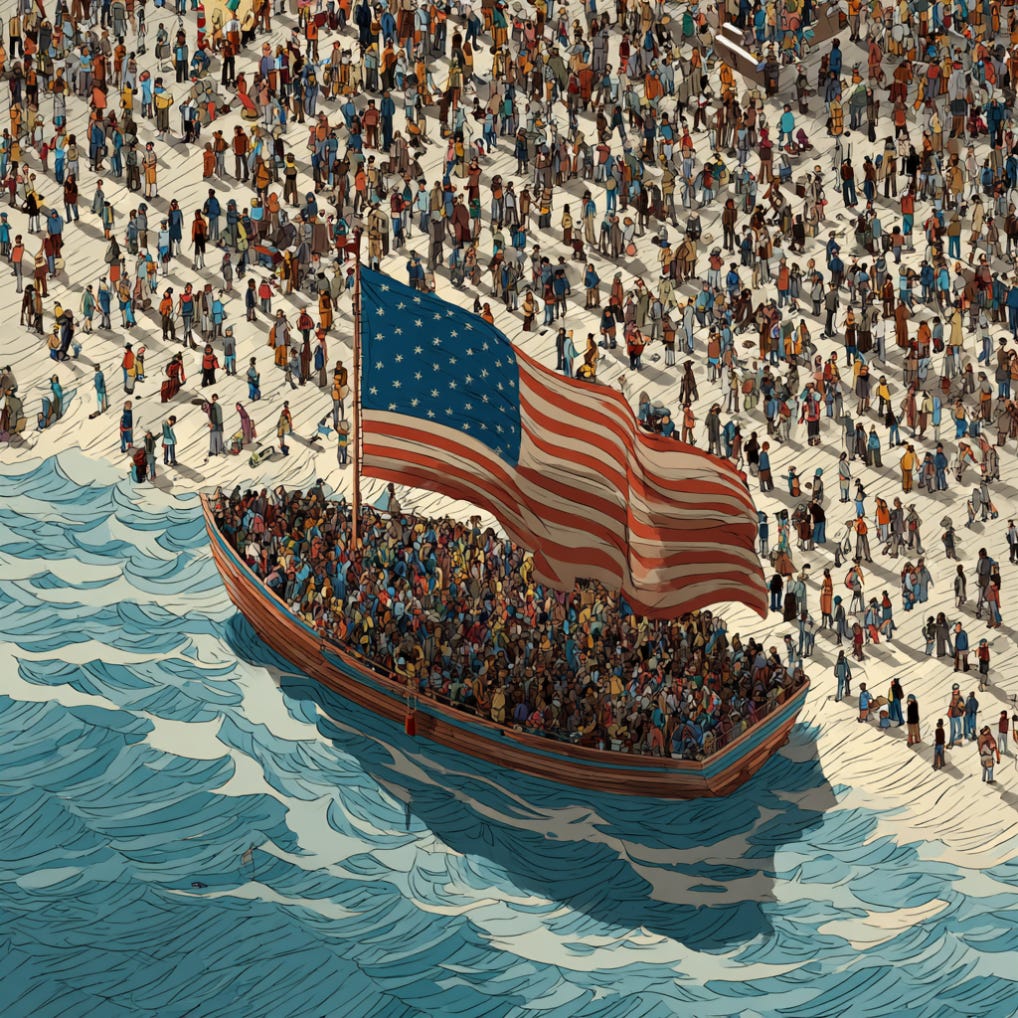
The unique character of Western high-trust societies did not emerge by accident or simply from ideas—it is the end product of centuries of selection acting on both genetic and cultural variation.
1. Polygenic Behavioral Traits
Traits like trust, empathy, in-group vs. out-group preference, impulse control, harm aversion, and social conformity are all:
Polygenic (influenced by many genes)
Quantitatively distributed (bell curves, not categories)
Moderately heritable (twin and adoption studies routinely show 30–60% heritability for social traits)
Crucially, small mean differences across populations—even when groups overlap greatly—produce radically different outcomes at the societal level, especially at the tails of the distribution. For example, a society with slightly higher average trust will have many more extreme “hyper-cooperators” and many fewer chronic defectors.
2. The Selection Pressures That Shaped NW Europe
Kinship Disruption: The medieval Western Church’s ban on cousin marriage and close-kin unions, starting around 500–1000 AD, broke up extended clans. This forced populations to build nuclear families and rely on formal institutions and rules, weakening nepotism and increasing trust in strangers.
Criminal Culling: For centuries, societies like England executed, banished, or ostracized chronic thieves, violent offenders, and those unwilling to abide by the law. These practices acted as a “slow filter” against the most antisocial, impulsive, and non-cooperative genotypes, shifting trait means over generations.
Environmental Filters: Northern Europe’s harsh winters and sparse populations rewarded long-term planning, mutual aid, and non-kin cooperation. Those unable to plan or work with non-family were less likely to survive or prosper.
Moral Universalism and Empathy as Status: Christianity and Enlightenment ideas elevated compassion for outsiders and abstract universalism, first as virtue, then as a source of status and social signaling. Over time, these became embedded in law, education, and elite culture.
3. Group Means and Tail Effects
While there is always enormous individual variation within populations, even a small shift in group averages—caused by cumulative selection and filtering—can have an outsized impact on the prevalence of high-trust, high IQ, highly empathetic, or universalist individuals.
For instance, the “genetic pacification” process in NW Europe, through criminal culling and kinship disruption, likely amplified high-trust and low-aggression tails, creating societies unusually prone to universalist morality.
These “right-tail” effects drive the emergence of unique social norms and institutional trust.
The foundation of the Western high-trust world is not simply cultural diffusion or ideology, but the result of many generations of selection on group-level genetic trait distributions—rooted in evolutionary pressures, institutional filtering, and environmental constraints.
II. Gene–Culture Coevolution: Culture Is the Product of Group Genetics
Culture does not arise in a vacuum, nor does it shape people in isolation.
Instead, culture and genetics are locked in a long-term feedback loop—each shaping, filtering, and reinforcing the other. This is the core insight of gene–culture coevolution.
1. Trait Distributions Filter Culture
The psychological and behavioral profile of a group—its baseline levels of trust, empathy, IQ, social conformity, and fairness—sets the statistical boundaries for which cultural innovations, norms, and institutions can thrive, and which will fail or be subverted.
A population with higher average trust and impulse control can sustain rule-based, high-cooperation systems; one with lower baselines defaults to informal enforcement, kin loyalty, and opportunistic strategies.
2. Culture as a Selective Environment
Once established, cultural rules and institutions themselves become part of the “environment” that further shapes selection.
Legal systems, religious customs, marriage norms, and economic practices all reward certain traits and penalize others. Over generations, individuals better adapted to these institutions are more likely to succeed and reproduce.
Example: In NW Europe, the Church’s marriage bans and harsh criminal justice system made it difficult for highly clannish, impulsive, or violent individuals to prosper, while favoring cooperative, law-abiding types.
This selection for low-nepotism and cooperative traits may also have included a reduction in aggression through “genetic pacification,” allowing for more stable, high-trust institutions.
3. The Feedback Loop
Genes shape culture: Only institutions and norms compatible with the group’s baseline traits will persist and spread.
Culture shapes genes: Institutions, once established, exert selective pressure that can shift trait distributions further in their own favor.
Over centuries, this produces “stickier” cultural patterns: Why do high-trust, rule-based systems take root in some places, but not others? The answer lies in the match between population genetics and the environment—including inherited culture itself.
4. Culture Is Statistically Genetic (But Not Deterministic)
Not every individual embodies the group mean; there is always overlap. But at the aggregate, culture is the emergent property of the group’s genetic and behavioral profile, filtered through environment and history.
This is why “importing” institutions to populations with different trait distributions rarely works: culture is not a costume, but a mirror.
III. Modern Mismatch: Incentives, Globalism, and the Trojan Horse

The strengths that made high-trust societies so successful—universalism, openness, and rule-based institutions—are now being systematically subverted by the realities of modern globalism and asymmetric group incentives.
1. Mass Migration Without Selection
In the past, cultural and institutional filters selected for compatible newcomers or gradual assimilation. Modern Western nations abandoned these filters, opening borders to millions from populations with sharply different trait means: stronger in-group loyalty, lower baseline trust in strangers, and alternative approaches to authority and cooperation.
No expectation or enforcement of reciprocal adaptation; host societies simply presume eventual convergence.
2. Incentive Asymmetry and Rational Extraction
Western institutions are built on the assumption of mutual cooperation, good faith, and reciprocity.
Example: Social safety nets, legal systems, and public goods depend on most people following the rules and contributing fairly.
When new arrivals are not selected for these norms, and when exploitation carries minimal social or legal penalty, rational actors will extract as much as possible from the system.
This is not about “bad actors” but about the basic logic of incentives and trait variance.
3. The Trojan Horse Mechanism
High-trust systems act as a Trojan horse—designed for a world where everyone plays by the same rules, but now open to exploitation by those who don’t share the same evolved behavioral profile.
The most universalist and trusting societies are, paradoxically, the most vulnerable to manipulation and extraction.
4. No Reciprocal Selection or Feedback
Natives continue to cooperate, comply, and pay in, while the rules are gamed by those who see opportunity.
The absence of feedback loops—social, political, or institutional—ensures that the system cannot self-correct until the burden becomes unsustainable.
5. What Happens Next
Extraction grows, trust erodes, and institutions buckle under the weight of unsustainable incentives.
As parallel societies grow and more resources are diverted to extraction and maintenance, native populations retreat or are replaced—structural decline accelerates.
Related: Europe’s Trojan Horse: Suicidal Empathy & Immigration
IV. Blank Slate: The Meta-Vulnerability

Perhaps the single greatest accelerant of Western institutional decline is the widespread, enforced belief that all human groups are behaviorally and cognitively identical—a dogma known as the “blank slate” ideology.
1. Suppression of Group Differences
Since World War II, Western elites in academia, media, and government have aggressively promoted the view that observed group differences in behavior, trust, empathy, or social outcomes are entirely the result of environment or discrimination.
Any suggestion that populations differ on average in evolved psychological traits—no matter how small the mean difference or how overwhelming the empirical evidence—is met with stigma, censorship, or career-ending sanction.
2. The Standard Social Science Model
Policy, law, and education are all built on the assumption that, with enough resources and the right environment, all groups will assimilate and contribute just like high-trust natives.
When this fails to happen, failure is blamed on “systemic racism,” “inequity,” or lack of funding—not on mismatched trait distributions or incentive misalignment.
3. Self-Neutralizing Feedback Loops
Because recognizing real group differences is taboo, Western institutions become incapable of adjusting to demographic, social, or behavioral reality.
Laws and programs are created as if trust, reciprocity, and cooperation can be assumed universally—even as evidence piles up to the contrary.
By the time the mismatch becomes undeniable, collapse is already baked in—and those who warned of it are blamed for the consequences.
4. Denial as Selection Amplifier
The blank slate ideology isn’t just misguided; it acts as a selection amplifier. By preventing honest diagnosis and feedback, it allows incentive misalignments to persist and compound.
This “meta-vulnerability” ensures that high-trust societies cannot defend themselves against exploitation, institutional capture, or demographic inversion.
Related: The Planet That Banned 90% of Reality
V. Parasitic Feedback Loops: NGOs, Lawfare, and Political Capture

The modern Western “helping” sector—NGOs, legal aid, and advocacy organizations—has evolved into a self-perpetuating machine, extracting resources from high-trust societies while entrenching its own power and dependency base.
1. Taxpayer-Funded Extraction
Billions in public funds are channeled annually into nonprofits, legal groups, “community organizations,” and contractors, all tasked with serving migrants, asylum seekers, and protected minorities.
Rather than fostering self-sufficiency or assimilation, the core business model rewards persistent need and dependency: the more dysfunction or grievance demonstrated, the more funding and political capital these groups accrue.
2. Rent-Seeking and Closed Loops
NGOs and legal service providers routinely divert a share of their public windfall to lobbying, campaign donations, and get-out-the-vote efforts for politicians who promise to increase their funding and expand client eligibility.
This forms a closed, parasitic loop:
Public money → NGO/Legal advocacy → Political campaigns & lobbying → Policy that increases funding and dependency → repeat.
3. Vote Farming and Policy Lock-In
Client populations (those receiving benefits and advocacy) are organized and mobilized as voting blocs, ensuring political power stays with those who maintain or grow the feedback loop.
Any attempt to audit, limit, or reform this ecosystem is met with coordinated legal, media, and activist attacks—framing reform as “cruelty” or “bigotry.”
4. Lawfare and Expansion of “Rights”
Legal campaigns, class action lawsuits, and strategic litigation are used to expand entitlements, weaken enforcement, and open new streams of resource extraction—from expanded asylum law to automatic benefits for newly arrived or even undocumented groups.
5. Permanent Extraction and Host Decline
As the ecosystem grows, ever more resources are diverted from the productive, net-contributing native population. The “helping” sector becomes a permanent political and economic parasite, ensuring that institutional self-defense is neutered and decline becomes locked in.
VI. Institutional Capture, Revisionism, and Two-Tier Systems

As Western societies become more diverse and universalist, their core institutions—government, media, education, and law—are transformed in ways that actively undermine the interests of the founding population and entrench new, unaccountable elites.
1. Revisionist History and Cultural Delegitimization
Official narratives and curricula are rewritten to cast natives—especially whites—as historic oppressors or “privileged,” erasing or minimizing their achievements and moral legitimacy.
Defense of group interests or even discussion of demographic change is stigmatized as “racist,” “white supremacist,” or “extremist,” shutting down normal political feedback.
2. Two-Tier Justice and Legal Double Standards
Protected groups and newcomers are given leniency, fast-tracked for benefits, shielded from enforcement, and even excused for infractions that would draw harsh penalties for natives.
High-trust citizens are held to stricter standards, penalized for minor infractions, and denied assistance or recourse even in genuine need.
3. Equity as Redistribution and Control
Equity and anti-racism policies go far beyond leveling the playing field: they are weaponized to redirect resources, influence, and opportunity from net contributors to politically favored or protected groups.
Public institutions, universities, and even corporate boards are compelled—by law, funding, or cultural pressure—to prioritize demographic quotas and “representation” over merit, contribution, or social trust.
4. Legal and Policy Lock-In
As the administrative and legal state is captured by new elites and activist groups, changing the system democratically becomes almost impossible.
Lawfare, regulatory barriers, and procedural complexity make reversal or reform extremely costly and politically perilous.
5. Loss of Native Leverage
Founding populations are increasingly expected to accept declining status, rising costs, and open hostility from their own institutions, all in the name of “progress” and “justice.”
As their demographic share falls, their ability to defend their interests—legally, culturally, or politically—erodes to zero.
VII. Extraction, Resource Flow, and the Golden Goose Paradox

The economic engine of Western societies has always been the high-trust, productive, and law-abiding core—primarily native whites and high-IQ Asians.
But as institutional incentives shift and demographic change accelerates, this productive base is increasingly mined, scapegoated, and replaced.
1. Net Contributors vs. Net Extractors
The bulk of tax revenue, innovation, and public goods is generated by a shrinking minority of net contributors.
In contrast, resource consumption and dependency—welfare, healthcare, public education, and subsidies—rise disproportionately among recent arrivals, protected classes, and politically favored groups.
Remittances send billions in wealth abroad, draining resources that could have funded social goods for citizens.
2. Replacement Migration as Policy
Declining native birth rates are used as justification for ever more “replacement migration,” supposedly to support the welfare state—but the newcomers are, on average, net extractors rather than new golden geese. (How to Fix Low Birth Rates)
Each wave of migration deepens the fiscal hole, as productive natives are demotivated to invest, start families, or even remain in their own country.
3. The Golden Goose Paradox
The more you demand from the high-trust, high-productivity minority, the less they have reason to keep producing.
As they are delegitimized, overtaxed, and replaced, their numbers dwindle to the point where the system collapses: the goose that laid the golden eggs is killed off for short-term gain.
4. Irreversible Fiscal Feedback
Once net contributors are outnumbered, and their interests systematically devalued, collapse is no longer a possibility—it is a certainty.
Public services degrade, redistribution fails, and the social contract that once underpinned prosperity is permanently broken.
VIII. Fertility Collapse, Empathy Misdirection, and Virtue-Signaling Feedback
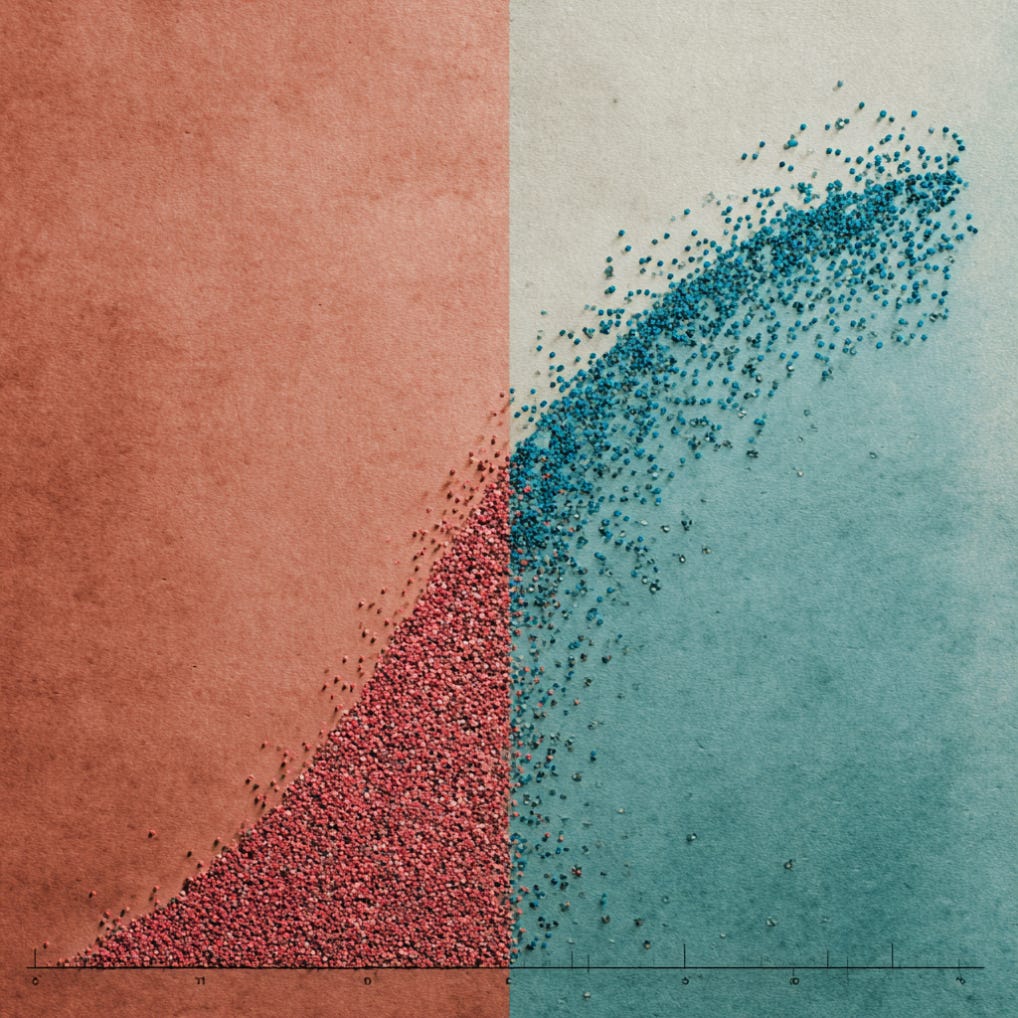
One of the most underappreciated drivers of Western unraveling is the collapse of native birth rates and the misdirection of evolved empathetic instincts—especially among women—toward causes and outgroups, rather than kin and community.
1. Declining Birth Rates and Kin Disconnection
As native fertility plummets, family size shrinks, and fewer people have children or close kin to invest in.
The nurturing drives that once supported robust kin networks and intergenerational transmission of values now lack natural outlets.
2. Empathy Without Borders
Instead of being channeled toward one’s own children, extended family, or community, empathetic energy is redirected outward:
To animals (Pitbull “parenting,” rescue movements) (We should actually ban Pitbulls) (Read: Why White People Keep Adopting Pitbulls)
To distant or abstract causes (NGOs, climate change, refugees, identity activism)
To symbolic victim groups, often at odds with native interests
3. Virtue-Signaling as Social Currency
In the absence of strong kin and community ties, moral prestige is increasingly won by demonstrating commitment to “helping” or “rescuing” the most distant or marginalized.
High-status signaling becomes a contest over who can sacrifice more for outgroups or abstract causes—further reinforcing the very feedback loops undermining group survival.
4. Self-Perpetuating Feedback Loop
The more society valorizes this redirected empathy and self-sacrifice, the less incentive natives have to invest in their own reproduction or defense.
This creates a vicious cycle: fewer children → more empathy redirection → weaker group cohesion → more incentive to seek status through outgroup rescue—until the foundational stock is too depleted to recover.
IX. Observable Outcomes: Western Decline Across the Diaspora
The interplay of evolutionary selection, broken incentives, institutional capture, and demographic feedback is no longer theoretical—it’s visible in every major Western society.
1. Social Trust and Cohesion Collapse
Once world-leading levels of trust, social capital, and civic participation are now in steep decline.
Neighbors interact less; public spaces feel less safe; common purpose erodes.
2. Rising Welfare, Legal, and Administrative Costs
Social safety nets, legal aid, and bureaucracy swell to meet expanding demand from increasingly dependent or newly arrived groups.
Fraud, inefficiency, and outright extraction become normalized, with little hope of reform.
3. Native Withdrawal and Parallel Societies
Natives disengage from politics, community life, and even public debate, as their interests are delegitimized or stigmatized.
Parallel societies—self-contained enclaves with divergent norms and loyalties—proliferate, undermining national identity and rule of law.
4. Organized Political Extraction and Vote Farming
Newcomer and protected groups organize to lobby for more resources, special status, and permanent legal protection—often as reliable voting blocs for the parties that sustain extraction.
Democratic feedback is neutralized, and reformers are marginalized or demonized.
5. Populist Backlash, Suppressed
Attempts to reverse these trends—through populist or nationalist movements—are met with relentless institutional opposition, media demonization, and legal barriers.
Policy correction only occurs (if ever) after major crisis or breakdown.
6. Demographic Eclipse
In city after city, and increasingly entire countries, the founding population becomes a minority—often within a few generations.
The “new normal” is demographic inversion, with little prospect for reversal.
X. Why This is Uniquely a Western Phenomenon
No other major civilization has engineered its own structural vulnerabilities—or moralized its own demographic and institutional decline—like the modern West.
1. Pathological Universalism and Open Borders
Only in Western nations has universal moral empathy been institutionalized to the point where border enforcement, self-preservation, and even basic reciprocity are condemned as “immoral.”
The legal and political default is openness—even when it is clearly not reciprocated by incoming populations or by any peer society globally.
2. Blank Slate Ideology as a Civic Religion
The belief that all groups are interchangeable in behavior and capacity is not just an academic quirk—it is enforced by law, media, and elite consensus.
Any recognition of group differences in behavior, trust, or social capital is immediately pathologized and sanctioned.
3. Elite Complicity and Moral Status-Seeking
Western elites—political, academic, and economic—derive status from celebrating openness, diversity, and the symbolic dismantling of “privilege.”
National cohesion, demographic continuity, and even basic survival are sacrificed to maintain elite legitimacy and social currency.
4. The Global Outlier: Non-Western Self-Defense
No non-Western society (Japan, Korea, Israel, Gulf States) has internalized universalism to the point of self-destruction.
These nations strictly police borders, enforce group interests, and align institutions with the long-term continuity of their founding populations.
5. Western Virtues as Fatal Flaws
The very strengths that built the modern West—trust, openness, fairness—have become liabilities in a global context where only the West adheres to them.
The outcome: the West stands alone as a civilization that moralizes its own decline, suppresses its defenders, and celebrates its own demographic eclipse—an unprecedented phenomenon in world history.
XI. The Structural Ledger and Endgame

The decline of Western high-trust societies is not an accident or the result of bad policy alone—it is a direct, structural consequence of evolutionary history, genetic trait distributions, and perverse incentives that now reinforce each other in a closed feedback loop.
1. Strengths Become Fatal Liabilities
Trust, fairness, openness, and moral universalism—traits that once created prosperity and cohesion—become vulnerabilities when not reciprocated.
High-trust natives are systematically extracted from, scapegoated, and ultimately replaced, even as they fund the entire system.
2. Incentives Ensure Irreversibility
The more you extract from the productive base, the less reason they have to invest, reproduce, or remain.
As feedback is suppressed by blank slate ideology, institutional capture, and moral shaming, the chance for correction narrows to zero.
3. Collapse is Baked In
When net contributors are outnumbered and systemically disempowered, there are no resources left to extract.
Public services collapse, trust vanishes, and parallel societies—often hostile—compete for shrinking spoils.
4. Nostalgia and Scapegoating
As the decline accelerates, expect resource battles, rising crime, and nostalgic mythmaking about the lost “golden age.”
True reformers and critics are blamed or demonized, as the political system devolves into endless blame-shifting and populist dead ends.
5. Two Possible Futures
Radical feedback restoration: Only a wholesale, unapologetic return to reciprocal boundaries, trait-based selection, and the restoration of high-trust norms offers a path to recovery—but this is politically and culturally radioactive.
Permanent fragmentation: Absent such a reset, high-trust civilization becomes a historical anomaly—its achievements studied, but never repeated.
The ledger is clear: Without systemic self-correction, Western societies will not just decline—they will dissolve, and their virtues will be remembered only as the cause of their demise.
XIII. Paths to Avoid Decline: Scenarios, Interventions, and Realistic Odds

Faced with the deeply-rooted evolutionary, demographic, and institutional forces driving Western decline, what—if anything—can actually reverse or transcend this trajectory? Below, I outline potential interventions, their logic, and a realistic, unsentimental assessment of their odds.
The goal: Avoid this futuristic “Autopsy of America.”
1. Radical Bioengineering and Cognitive Enhancement (Embryos & Somatic Upgrades)
Logic: Directly increase the prevalence of pro-social, high-IQ, and high-future-orientation traits in the population—through embryo selection, CRISPR gene editing, somatic interventions, or other biotechnologies.
Benefits: Attacks the root (trait distribution); could potentially create a new equilibrium where high-trust institutions are again sustainable—even at scale and in diverse societies.
Risks: Immense technical, ethical, and political barriers; would require mass adoption, regulatory tolerance, and years-to-decades of societal buy-in. Likely to be demonized, sabotaged, or outlawed in most democracies.
Odds (by 2100): 5–10% for meaningful deployment in the West; much higher (25–50%) for some form of bioenhancement/selection being adopted by authoritarian or non-Western states first.
Rationale: If nothing else, technological acceleration elsewhere will force the question.
2. Reversal or Pause of Aging (“Longevity Escape Velocity”)
Logic: If Western societies could dramatically slow, pause, or reverse aging, you break the “replacement migration” trap—natives no longer die off, institutional memory and trait selection are preserved, and incentives to invest in the future rebound.
Benefits: Buys time for policy adaptation, demographic stabilization, and trait/skill transmission.
Risks: Still requires massive tech breakthroughs and equitable access. Potential for new forms of intergenerational conflict or ossification.
Odds (by 2100): 10–20% chance of major longevity breakthroughs; less than 5% odds for broad societal reversal of the demographic spiral.
Rationale: Useful as a stopgap, not a silver bullet.
3. AI and Robotics Diffusion—Embedded with High-Trust Ethos
Logic: Deploy superhuman AI, robotics, and automation (aligned with American/Western values) to maintain social order, productivity, and institutional capacity even as trait distributions erode.
Benefits: Could mask or buffer the loss of high-trust, high-IQ maintainers, letting institutions “run on AI autopilot” as social capital drops.
Risks: Alignment remains unsolved; values can be hijacked; AI itself could be captured by replacement elites or foreign interests.
Odds (by 2100): 20–40% for AI keeping some degree of order or prosperity; <10% for AI aligned robustly with original Western ethos for multiple generations.
Rationale: This is the most “realistic” path if technological alignment succeeds—but still leaves core population/cultural replacement unaddressed.
4. Sociopolitical Reset (“Nationalist Restoration,” “Reciprocal Immigration,” etc.)
Logic: Restore trait-based immigration, strict reciprocity, and unapologetic boundaries (either through political revolution or institutional collapse and rebuilding).
Benefits: Directly addresses demographic and incentive mismatches; the only historical example of societies escaping the “extraction” trap.
Risks: Politically toxic; would require mass consensus, or emerge from crisis; risks civil conflict or secession.
Odds (by 2100): 10–20% for partial reset (some Western states); 1–2% for full civilizational reversal.
Rationale: The only path with strong precedent in history—but least likely under current Western elite consensus.
5. Separation or Colonization (“Mars Option,” New Frontiers)
Logic: If Earth’s high-trust equilibrium is irreversibly lost, a splinter of the population “leaves”—either via physical colonization (space, Mars, sea-steading) or digital/AI societies.
Benefits: Preserves the evolutionary, cultural, and institutional package elsewhere, even if lost on Earth.
Risks: Technically daunting, ultra-expensive, and only available to a tiny minority. Replicates founder effects but may just “replay” the same selection story.
Odds (by 2100): <1% for Mars/space; 5–10% for digital frontiers or seasteads.
Rationale: Only becomes realistic if all else fails—but likely to attract the highest-IQ, most future-oriented “remnant.”
References and Further Reading
A rigorous, data-driven understanding of Western societal decline—and the evolutionary, genetic, and cultural mechanisms behind it—requires engaging with a wide range of sources.
Below are foundational books, papers, and data repositories for further research.
Foundational Works on Evolution, Gene–Culture Coevolution, and Trait Distributions
Joseph Henrich — The WEIRDest People in the World (2020): The gold standard on how Western psychology and institutions evolved.
Gregory Clark — A Farewell to Alms (2007); The Son Also Rises (2014): Deep dives into social mobility, selection, and behavioral filtering in England and Europe.
Peter J. Richerson & Robert Boyd — Not By Genes Alone: How Culture Transformed Human Evolution (2005): Classic on gene–culture feedback.
Kevin Laland et al. — “Gene–Culture Coevolution in Human Evolution” (PNAS, 2011): Definitive review paper on the coevolution framework.
Norbert Elias — The Civilizing Process (1939): How Western norms of self-control, empathy, and cooperation took root.
Peter Frost — Essays and peer-reviewed research on European selection pressures, criminal culling, genetic pacification, and the evolutionary emergence of high trust and universalist morality.
On Blank Slate Denial, Behavioral Genetics, and Institutional Failure
Steven Pinker — The Blank Slate (2002): The destruction of “all groups are the same” dogma.
Nicholas Wade — A Troublesome Inheritance (2014): Argument for the role of population genetics in human social outcomes.
Jonathan Haidt — “Why Universities Must Choose One Telos: Truth or Social Justice” (Heterodox Academy, 2016): Institutional consequences of prioritizing “equity” over reality.
Institutional Capture, Parasitism, and Observable Outcomes
Heather Mac Donald — The Diversity Delusion (2018): Critique of how DEI and “equity” have captured American institutions.
Robert Putnam — Bowling Alone (2000); “E Pluribus Unum” (Scandinavian Political Studies, 2007): Declining social capital and the effect of diversity on trust.
Peter Turchin — Ages of Discord (2016): The demographic-institutional feedback loops of elite overproduction and collapse.
Empirical Data, Policy, and Contemporary Reporting
OECD Social Trust Indicators: Cross-national trust and social capital statistics.
UK ONS (Office for National Statistics): Benefits, migration, and demographic breakdowns.
World Bank Remittance Data: Outflows by country and group.
Heritage Foundation: Fiscal impact analyses of migration and welfare.
City Journal (Manhattan Institute): Reporting on NGOs, migration, and urban governance.