

Boston calls itself the “Cradle of Liberty” — a city built on the principle that government exists to serve citizens equally, not to sort them by race, punish dissent, or shield itself from accountability.
Under Mayor Michelle Wu, that foundational American ethos has been systematically inverted.
This is not about political disagreement. It is about documented conduct: (1) race-based governance that explicitly favors some citizens over others; (2) a City Hall that routes critics’ names to police; (3) staff scandals that would end most political careers; (4) reflexive hostility to innovation; (5) a budget that balloons while taxes spike; and (6) foreign-influence vulnerabilities that any serious city would firewall rather than dismiss.
The pattern is clear: Wu’s administration governs as though ideology trumps equal protection, and Boston residents are expected to accept it.
The Counterfactual Test
Before examining the specifics, consider the test that exposes what is happening:
If Wu hosted an “Electeds of White Holiday Party,” it would be called segregation.
If Wu joked about problems being “expensive, disruptive, and Black,” it would be called racist.
If Wu bragged about awarding $150 million in contracts to White-owned businesses, it would be called White supremacy.
If Boston’s Housing Strategy mandated “at least 65% should go to White households,” it would trigger immediate federal action and national outrage.
If Wu publicly celebrated that a grants program went overwhelmingly to White-owned businesses, the story would be “racism” on every front page.
Wu’s Boston runs these exact structures — but because the discrimination flows in the politically fashionable direction (anti-White), it gets rebranded as “equity.”
Either equal citizenship matters or it doesn’t.
Race-First Governance: Discrimination as Policy
HUD Housing Discrimination Investigation
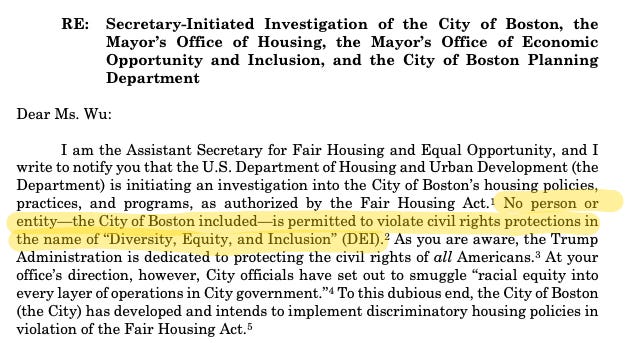
In December 2025, the U.S. Department of Housing and Urban Development launched a formal civil rights investigation into Boston’s housing policies.
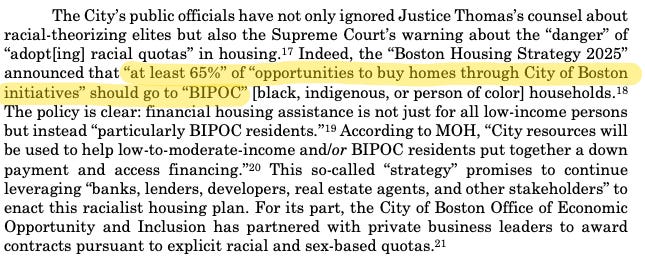
HUD’s letter cited Boston’s Housing Strategy 2025, which explicitly mandates that “at least 65% of opportunities to buy homes through City of Boston initiatives should go to BIPOC households.” (R)
The agency alleges Boston’s programs favor Black and Latino residents across municipal operations.
HUD Secretary Scott Turner stated:
“We believe the City of Boston has engaged in a social engineering project that intentionally advances discriminatory housing policies driven by an ideological commitment to DEI rather than merit or need.” (R)
HUD’s letter explicitly referenced Wu’s “morally repugnant racially exclusionary holiday party” as evidence of the administration’s broader approach to race-based governance, comparing the city’s housing policies to historical redlining.
Here’s the core point: when government decides that a certain race should move you ahead in the line, it is blatantly discriminating against whoever is moved behind the line (in this case it was anti-White discrimination and overt racism).
Clever wokes frame this as “equity,” but the mechanism is still overt discrimination — which is the precise reason federal civil-rights law exists in the first place.
Nothing like fighting past racism and discrimination with more racism and discrimination.
Wu’s spokesperson dismissed the federal civil rights investigation as “unhinged attacks from Washington.” (R)
The “Electeds of Color” Holiday Party
In December 2023, Wu hosted an “Electeds of Color Holiday Party” at the city-owned Parkman House.
When invitations were accidentally sent to all 13 city councilors, Wu’s aide Denise DosSantos rescinded invitations to the seven White councilors within 15 minutes.
DosSantos apologized for the “mistake” of inviting White councilors — but not for planning a racially exclusionary event. (R)
Many described the episode as a DEI misstep that backfired and deepened division.
Strip away the euphemisms: when an official government event excludes officials because they are White, that is racial segregation in practice.
If a Southern mayor hosted an “Electeds of Whites” party and rescinded invitations from Black councilors, the country would correctly call it racist and demand resignations. The principle does not change when the target changes.
White councilor Frank Baker called the situation “unfortunate and divisive.” White councilor Michael McCormack noted this was not typical of the mayor’s office and that previous mayors would have invited the entire chamber. (R)
Wu had the unmitigated audacity to defend the exclusionary event, calling it “a longstanding affinity group” and later posting photos celebrating [that] “our affinity group now includes leadership across city, state, county, and federal offices.” (R)
Fox News’ Greg Gutfeld called it “blatant racism” and “bringing back segregation.” (R)
Records obtained by the Boston Herald showed Wu used campaign funds to pay for the party after city officials initially planned to use taxpayer funds. (R)
The event and rescinded invites are well documented.
The AG’s office said it did not appear to violate the state public accommodations law “because the event was not open to the public.”
In other words: the legal defense used was that the event was “invite-only” not “non-discriminatory.”
Judicial Watch filed litigation seeking records relating to the party/invites.
The point isn’t whether an affinity group can exist socially, it’s whether City Hall, using official space and staff, normalizes race-based exclusion as acceptable governance.
“Expensive, Disruptive, and White”
At the St. Patrick’s Day breakfast, Wu said she was:
“Getting used to dealing with problems that are expensive, disruptive, and White.” (R)
Then immediately framed it as a “snowflakes/snowstorms” joke — an explanation she and her allies have relied on ever since.
The defense is always the same: it was a joke.
But this is the mayor of Boston deliberately using “White” as a loaded descriptor—because she knows how it plays politically.
Apply the counterfactual: replace “White” with “Black.” Everyone knows what that would be called.
Bragging About Racial Contract and Grant Preferences
Wu publicly celebrates directing city resources by race.
In her 2025 State of the City address, she declared (R):
“In the last year alone, we’ve awarded over $150 million in city contracts to businesses owned by people of color—more than double the value in 2021.”
City Hall press releases have been explicit that major contracting support programs are designed for “small, minority-owned, and women-owned businesses.”
In FY2024, the city reported awarding $230.1 million (12.1%) of contracts to certified minority- and women-owned businesses—a 40% increase from the previous year. (R)
Wu’s communications have also touted “$35 million in grants” to “more than 1,500 small businesses,” with “over 70% of them owned by people of color.”
The city created a “sheltered market program” that reserves certain contracts specifically for minority- and women-owned businesses, with an explicit goal that minority-owned businesses “can ultimately win a quarter of city contracts.” (R)
Nobody is arguing that minority entrepreneurs shouldn’t have opportunities.
The issue is government deciding that the correct way to run a city is to measure economic support by race and sex, and to build programs around identity categories.
That is the opposite of equal treatment.
North End Restaurant Discrimination
Wu imposed a $7,500 fee on North End restaurants for outdoor dining permits, plus $480 per parking space used.
This fee was charged exclusively to North End establishments; restaurants in every other Boston neighborhood paid nothing. (R)
Nearly two dozen North End restaurateurs filed lawsuits alleging discrimination based on their Italian heritage and White ethnicity, citing Wu’s “expensive, disruptive, and White” comment. (R)
Restaurant owner Jorge Mendoza-Iturralde stated:
“There’s an attack on White Americans. There’s an attack on European descent. There’s an attack on our history. What we are saying is that we want to be treated equally to everyone else.”
In 2023, a group of owners explicitly framed the dispute as discrimination against Italian restaurateurs, and local outlets covered the claim as a formal allegation in court filings. (R)
That same year, Boston made outdoor dining permanent citywide while tightening rules in the North End (including eliminating on‑street dining there), which intensified the argument that City Hall was not applying a uniform standard across neighborhoods. (R)
Legal analysis of the case indicates the court ultimately rejected those discrimination‑style claims rather than validating them. (R)
Historical Revisionism: The Somali Speech
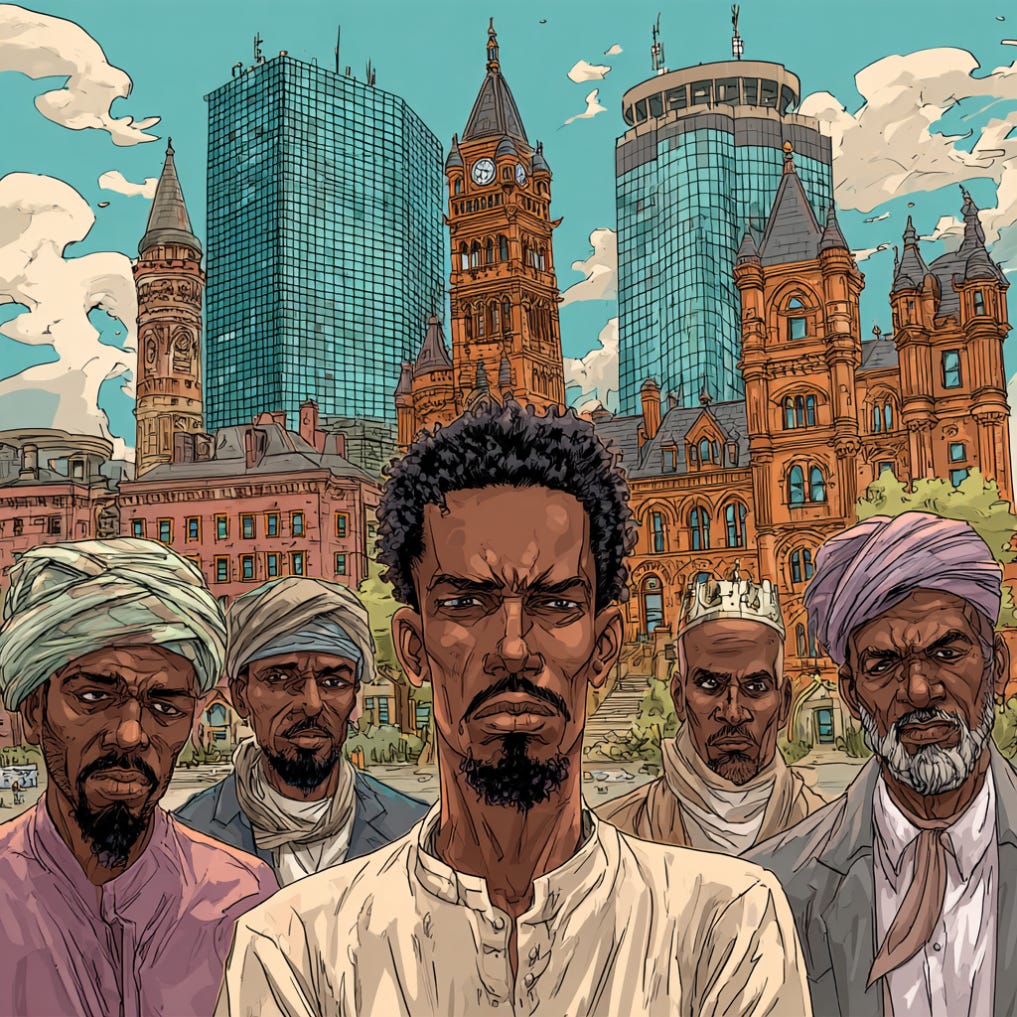
On December 22, 2025, Wu spoke at a Somali-American community rally and declared:
“You cannot talk about any achievement that the city of Boston has had — in safety, jobs and economic development, in education — without talking about the Somali community that has lifted our city up.” (R)
Boston was founded in 1630 by Puritans. The Somali community’s presence in the city dates primarily to the 1990s. You don’t need a PhD to see the problem.
Praising Somali Bostonians as neighbors is one thing; claiming the city’s achievements in “safety, jobs, economic development, and education” can’t be discussed without them is just not even remotely accurate.
Wu’s statement is revisionist pseudo-history that praises a group for something they had little-to-no part in, while failing to mention contributions of early immigrant communities (Irish, Italian, et al.) who built Boston over nearly four centuries.
If leaders will say something this obviously false to flatter a constituency, what else will they say (and what else will they do) when the stakes are higher?
The timing was notable: Wu’s comments came as federal prosecutors in Minnesota had charged 92 defendants in Somali-linked fraud schemes. Officials estimate the fraud (targeting programs including child nutrition assistance) could cost taxpayers billions. (R)
In July 2025, Wu declared July 1 “Somali Independence Day” in Boston and celebrated raising the Somali flag over City Hall, stating:
“Boston is safer, smarter, and stronger because of our Somali neighbors.” (R)
Something to highlight is that all evidence suggests Somalis have been (as a group) massively harmful in the U.S.: (1) fiscally (extraction of benefits vs. contributions), (2) criminally (particularly via fraud schemes), and (3) socially (identity politics, clannishness, poor assimilation).
This isn’t to say that all Somalis are identical or that things can’t change for the better, but there’s currently little-to-no evidence to support optimism.
My current best estimation suggests that Somalis, on average, cost U.S. taxpayers $550,000 to $600,000 per-person lifetime on the conservative end.
Read: Somalis in Minnesota: Estimated Impact
Foreign Influence: The Gary Yu Connection
The $300,000 Question
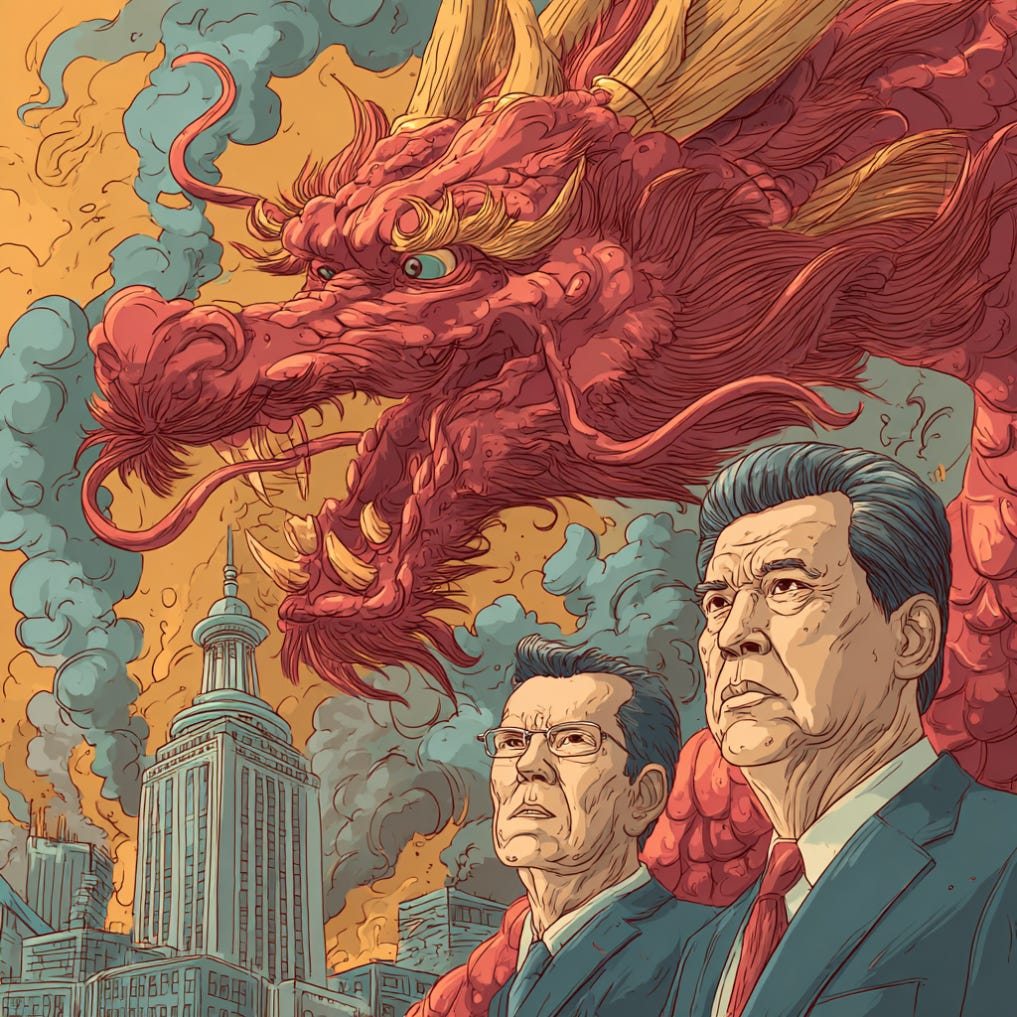
A Daily Caller News Foundation investigation revealed that Wu’s 2021 mayoral campaign received over $300,000 in bundled donations organized by Gary Yu (Yu Guoliang), who is identified as an “overseas committee member” by the Hangzhou municipal All-China Federation of Returned Overseas Chinese—a United Front Work Department agency. (R)
There is no responsible way to treat that as “nothing.” Even if every dollar was legally sourced and every form was properly filed, a mayoral campaign being fueled by a key fundraiser identified in Chinese government-linked sources is a screaming red flag.
The UFWD’s operations are characterized by the House Select Committee on the CCP as “a unique blend of engagement, influence activities, and intelligence operations that the CCP uses to shape its political environment, including to influence other countries’ policy toward the People’s Republic of China.” (R)
Yu serves as co-chair of the New England Chinese American Alliance (NECAA), which according to its own website “raised over $300,000 from the Chinese American community for Michelle Wu.” Massachusetts campaign finance records show Yu personally donated $45,515 to various Massachusetts Democratic politicians since 2018. (R)
China expert Gordon Chang stated (R):
“The Communist Party’s UFWD never rests. There is no ethnic Chinese official in America who is not targeted. It’s time for law enforcement to investigate the CCP’s ties to Gary Yu and Yu’s ties to Mayor Michelle Wu.”
Chang added:
“Wu’s ultra-leftism makes her the perfect candidate for CCP recruitment and capture. Or do we have it backward? Is her ultra-leftism the result of CCP recruitment and capture? More than just the people of Boston would like to know.”
City Hall Access for CCP-Linked Groups
A July 2025 DCNF investigation reported that Wu’s administration hosted events at Boston City Hall connected to the Boston Urban Forum (BUF), with individuals identified as CCP members in Chinese government and state media reports serving as moderators and guest speakers for at least half of BUF’s events. (R)
BUF lists Gary Yu as a co-founder. Its events have been held at “the Civic Pavilion of Boston City Hall,” with City of Boston seal appearing in sponsor graphics—meaning the city provided not just venue but official legitimacy. (R)
The National Counterintelligence and Security Center has warned that PRC influence operations in the U.S. aim to expand support for PRC interests among state and local leaders. (R)
A basic expectation in American civic life is that city leadership should be insulated from foreign influence—especially influence tied to a hostile authoritarian state.
When the reporting says “hundreds of thousands” flowed into the campaign through a fundraiser alleged to be linked to that system, the correct response is not dismissal and spin. The correct response is transparency and investigation.
Wu’s office did not respond to multiple requests for comment from the DCNF regarding these connections.
The claim here is not “a smoking gun spy confession.” The claim is that a major fundraising conduit identified in reporting as tied to the CCP influence ecosystem is a national-security vulnerability, and Boston voters deserve full transparency and scrutiny.
Sanctuary City Defiance and Federal Litigation: Protecting Illegal Immigrants
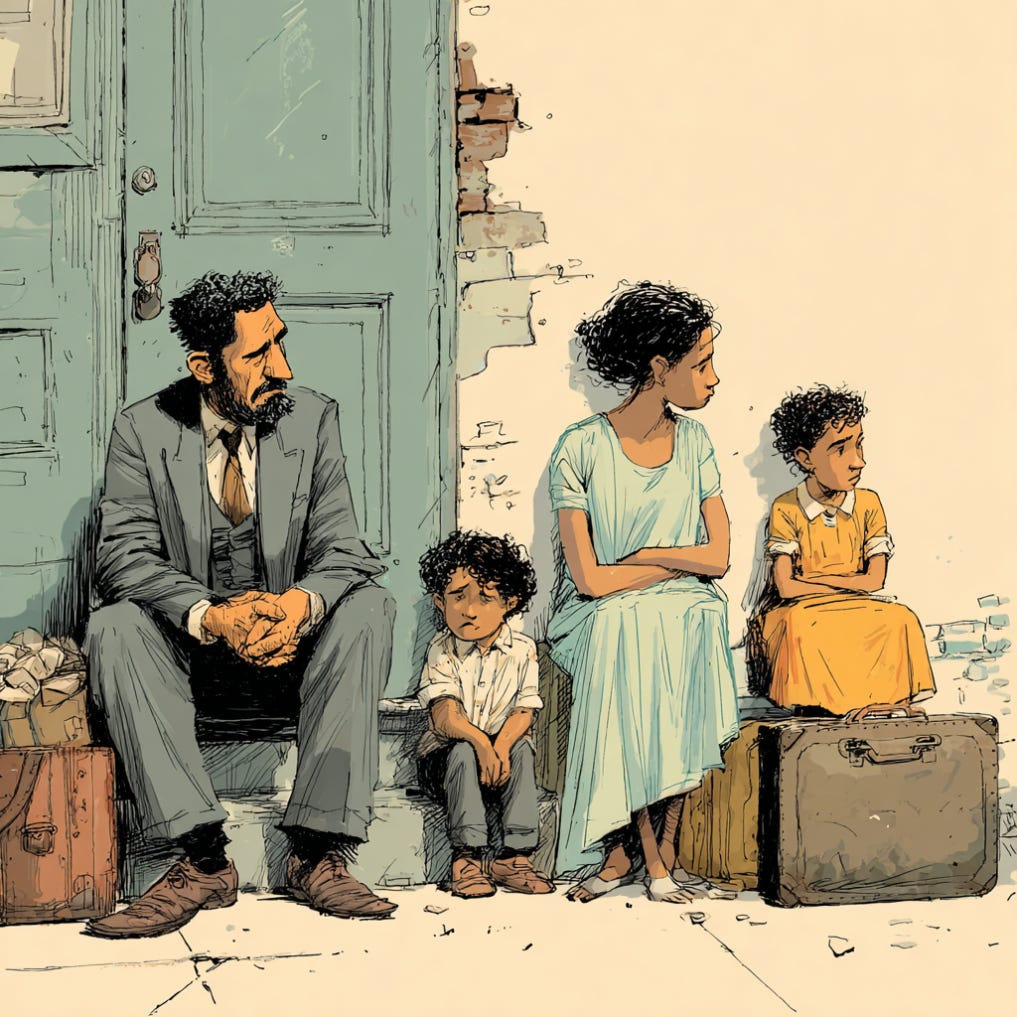
In September 2025, the Department of Justice filed a lawsuit against Wu, Boston Police Commissioner Michael Cox, and the City of Boston over the city’s sanctuary policies.
Attorney General Pam Bondi stated:
“The City of Boston and its Mayor have been among the worst sanctuary offenders in America—they explicitly enforce policies designed to undermine law enforcement and protect illegal aliens from justice.” (R)
The DOJ complaint alleges the Boston Trust Act results in “the release of dangerous criminals from police custody who would otherwise be subject to removal,” including individuals charged with “homicide, assault, larceny, and sexual and drug-related offenses.” (R)
Comparing ICE Agents to Neo-Nazis
In June 2025, Wu compared ICE agents to members of NSC-131, a New England neo-Nazi group, stating (R):
“I don’t know of any police department that routinely wears masks. We know that there are other groups that routinely wear masks. NSC-131 routinely wears masks.”
The U.S. Attorney for Massachusetts condemned her remarks as “reckless and inflammatory.” (R)
You can oppose federal immigration policy without smearing law enforcement as Nazis.
When a mayor uses that kind of rhetoric, she isn’t protecting “democracy”—she’s weaponizing moral panic to cement political loyalty. It’s grievance politics at the highest level of local government.
In her March 2025 State of the City address, Wu attacked the Trump administration:
“No one tells Boston how to take care of our own. Not kings, and not presidents who think they are kings.” (R)
The Critics List: When City Hall Tracks Dissenters

Wu has said she faced aggressive, sometimes intimidating protest activity — especially around parades and outside her home.
In July 2023, it was revealed that Wu’s administration compiled a list of 15 vocal critics and provided it to the Boston Police Department. The list was sent from Wu’s Director of Constituent Services Dave Vittorini to Boston Police Captain Robert Ciccolo. (R)
The list included City Council candidate Catherine Vitale, former police sergeant Shana Cottone, and North End restaurant owners who opposed Wu’s policies. (R)
Even if you grant the mayor’s stated safety concerns, this is still a civic red flag.
A government compiling names of recurring political antagonists and forwarding them to police creates a chilling precedent. It blurs the boundary between legitimate security planning and the machinery of the state monitoring dissent.
A judge ordered the Wu administration to turn over communications about the list in a legal case, with questions about the list’s purpose and use. (R)
Vitale stated: “[Mayor Wu] made it clear she will abuse her power to silence her critics.” (R)
When asked about comparisons to Nixon, Wu dismissed them: “I certainly wasn’t around then and have no sense that there’s any relevancy.” (R)
After months of loud targeted demonstrations outside her Roslindale home, Wu filed an ordinance limiting “targeted residential picketing” to a narrower window (allowing it only between 9 a.m. and 9 p.m.), and the City Council approved it. (R)
The city then moved from policy to enforcement, with arrests and fines reported under the new rule.
This is the broader context that makes the “hecklers list” episode more than a one‑off: it fits a pattern of government treating political friction as something to be managed through police and code enforcement rather than tolerated as normal democratic noise. (R)
A mayor who can’t tolerate vocal critics without creating lists for police is a mayor drifting away from American democratic norms.
Major Staff Scandals and Ethical Breakdown
Wu’s brand is managerial competence plus progressive virtue. But her administration has repeatedly been rocked by insane scandals that make City Hall look like a revolving door of dysfunction.
A) Daunasia Yancey: LGBTQ+ Deputy Director Arrested for Felony Assault
Daunasia Yancey, Deputy Director of Wu’s Office of LGBTQ+ Advancement and founder of Black Lives Matter Boston, was arrested on April 11, 2025 on felony charges of assault and battery with a dangerous weapon, placed on leave April 15, and moved to unpaid leave May 7, 2025.
According to court documents: Yancey allegedly grabbed the victim, threw her out of bed, and slammed her into a wall during a domestic dispute. (R)
The arrest was kept quiet for nearly three months until Mass Daily News uncovered it.
Yancey was placed on unpaid leave only after the city “was able to obtain more specific information”—after the case became public. (R)
City of Boston payroll records show Yancey’s salary rose from $70,701 (2023) to $116,572 (2024) — a $45,871 increase (+64.9%). (R)

B) Police Accountability Chief of Staff Arrested for Assaulting Police Officer
In May 2025, Marwa Khudaynazar (Chief of Staff for Wu’s Office of Police Accountability) was arrested for assault and battery on a household member and assault on a police officer.
The irony of the “police accountability official” allegedly assaulting a police officer was not lost on observers. (R)
A police report indicated Khudaynazar invoked her city hall status when police arrived, attempting to avoid consequences.
Khudaynazar and her boyfriend Chulan Huang (also a city staffer) were both terminated after invoking their positions with police. (R)
This wasn’t a distant incident. One of the fired employees was the chief of staff at the Office of Police Accountability — an office literally tasked with oversight and standards.
Khudaynazar later sued the city (and other defendants), seeking release/unsealing of police body-camera footage and disputing the public narrative about her alleged actions. (R)
Put it together and you get an ugly pattern: public-facing “accountability” rhetoric paired with internal chaos, internal reviews that become political flashpoints, and a growing demand for outside, independent scrutiny.
Pattern of Problems
A Boston Herald editorial noted:
“The pattern of incidents in recent months underscores a serious gap in safeguards, suggesting additional cases may exist undetected.”
The editorial asked:
“What would happen if a non-political city employee — say, a DPW worker or school custodian — was arrested for felony assault? Would they still be collecting a taxpayer-funded salary three months later?”
Anti-Innovation: Killing Robotaxis to Protect Union Jobs
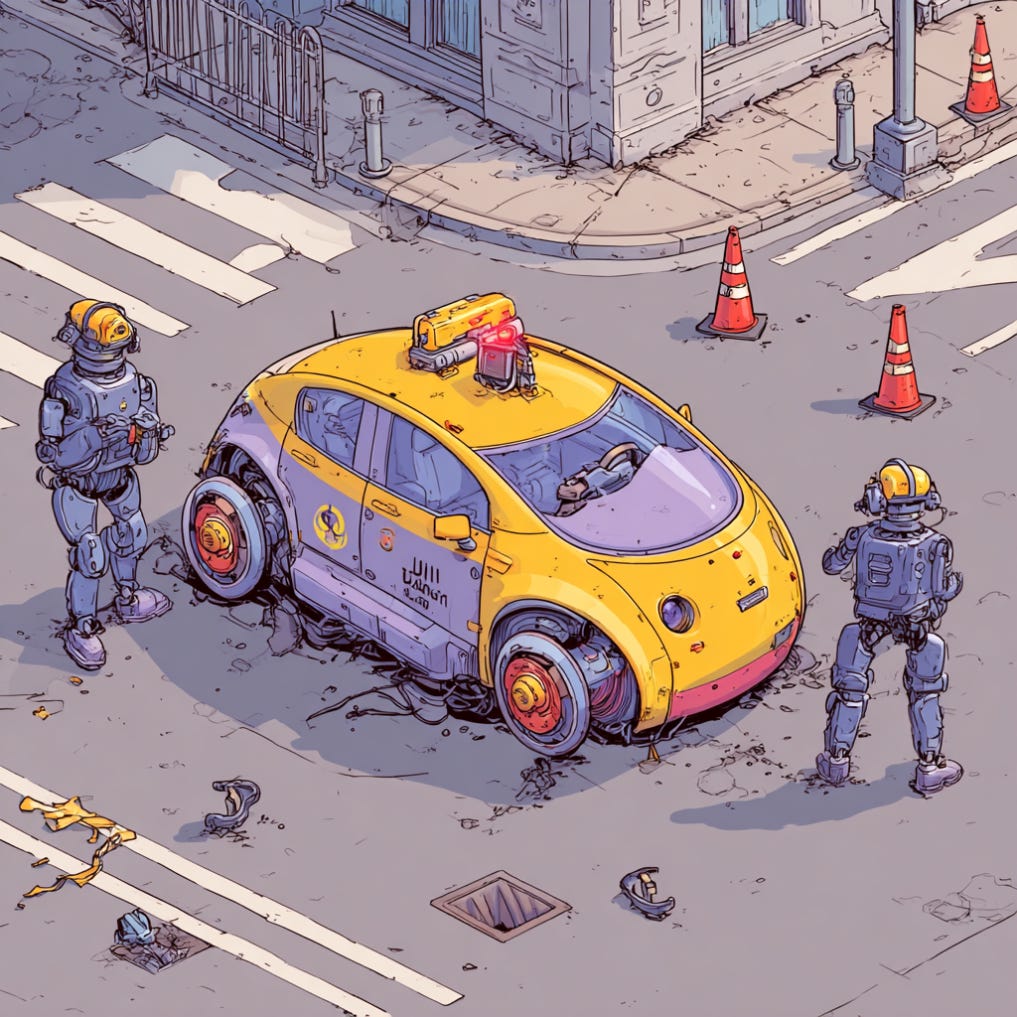
If you want a simple example of “American ethos detachment” in policy form, look at the robotaxi debate.
Boston City Council postponed a vote on an ordinance that would effectively ban commercial autonomous vehicles and deliveries in Boston, amid concerns about self-driving cars and how to regulate them. (R)
Waymo and autonomous vehicles ran into “skepticism and opposition” at Boston City Council.
Wu’s chief of streets warned that even if Waymo can operate safely, if it “drives like a confused out-of-state tourist,” it would be unwelcome, emphasizing autonomous vehicles must align with the administration’s goals on “labor,” “climate,” and “traffic.” (R)
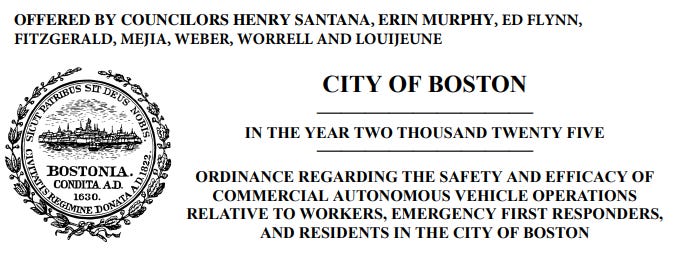
Boston City Council Docket #1432 (R):
“Any permit process must include the following requirements: (a) an Autonomous Vehicle operating in the City of Boston shall not transport passengers or goods unless a human safety operator is physically present in the vehicle and has the ability to monitor the performance of the vehicle and intervene if necessary, including but not limited to taking over immediate manual control of the vehicle or shutting off the vehicle; and (b) that Autonomous Vehicles and human safety operators must meet all applicable local, state and federal requirements.”
The council moved toward requirements that would force robotaxis to carry a “human safety operator” — a rule that functionally neuters the entire point of driverless systems. (R) Most people want robotaxis because they are: safer and you aren’t at the operational whims of some stranger.
You don’t have to be a techno-utopian to see what this signals: a reflex to prohibit rather than govern; to freeze the future rather than build rules that keep people safe while allowing progress.
Boston is a world center for biotech, higher ed, and advanced tech. A city that defaults to “ban it” is a city that slowly stops being the place where the next thing is built.
Fiscal Squeeze: Taxes Up, Budget Ballooning, Transparency Down
1. Property Tax Spike
Boston City Council set rates effectively locking homeowners into a 13% residential property tax increase. (R)
This represents a 34% cumulative increase since 2023 for residential taxpayers, tied to Boston’s broader fiscal pressure and commercial real estate decline. (R)
2. Budget Growth
Wu’s FY26 operating budget totals $4.8 billion. (R)
The budget has grown from $3.8 billion when Wu took office to $4.8 billion—a roughly 26% increase—while residents absorb double-digit tax pain.
3. White Stadium: Cost Overruns and Transparency Failures
White Stadium is a public stadium in Franklin Park used for Boston Public Schools athletics; the Wu administration’s plan is a public-private redevelopment tied to a pro women’s soccer team and BPS/community use.
Candidate Kraft alleged taxpayer exposure could reach roughly $172M; Wu dismissed that as a highly unlikely “worst-case scenario.” (R)
Meanwhile, the city’s own public estimates have climbed: officials set aside $50M for the city’s half in spring 2024, and the most recent official estimate later rose to $91M. (R)
Wu has also said the final cost can’t be fully known until bids are finalized and more construction phases are priced. (R)
And after promising an updated estimate “later this calendar year,” the administration has signaled the update may not come until early 2026. (R)
Massachusetts’ Supreme Judicial Court agreed to take up the White Stadium case. (R)
Street Policy Whiplash
That is an institutional confession: the administration pushed major street changes faster than it could plan, communicate, or maintain public legitimacy.
A city is not a whiteboard. When you “move fast and break things” with emergency routes, neighborhood access, and local commerce, you get backlash and chaos.
This isn’t just critics complaining about inconvenience.
In a memo to Wu, city officials themselves said Boston may have “moved too fast” on adding bike and bus lanes, an internal acknowledgment that the administration’s rollout outran planning, communication, or public buy‑in. (R)
That admission undercuts the usual City Hall line that backlash is merely irrational resistance to change—because the city’s own review conceded pacing and execution problems.
Mass and Cass: Disorder Displaced, Not Solved
Wu’s administration banned tents and cleared the Mass and Cass encampment as part of a public health approach.
This is a great thing. Clearing encampments is necessary. A city can’t normalize open-air drug markets and tent cities.
Why? They are mostly full of people with serious mental illness and drug addictions and a danger to citizens of Boston.
Homeless individuals need to be rounded up and institutionalized until stabilized (if possible).
While Wu may have had the right intention here, the results were disastrous: Small groups scattering into nearby residential neighborhoods, with residents and businesses reporting needles, break-ins, and people sleeping in public spaces. (R)
That is the Wu pattern: remove the visible mess from one hotspot, then redistribute the pain across neighborhoods, while insisting critics are heartless for noticing.
Crime Statistics
Boston Police Commissioner Michael Cox reported homicides increased approximately 30% in 2025, with 31 deaths compared to the historic low of 24 in 2024. Shoplifting increased 15% year-over-year. (R)
Wu attributed the shoplifting increase to online resale platforms like Amazon, stating:
“It’s a changing world, right? There is just so much more incentive for people to grab things.” (R)
City Councilor Ed Flynn stated:
“The homicide rate has increased significantly in Boston compared to last year. The ongoing retail theft is negatively impacting our businesses, workers, and the public as well.”
Flynn added that the city must admit: “we don’t have enough police officers in the city.” (R)
Despite the uptick in homicides, Wu claimed at the year-end press conference that Boston remains “the safest major city in the country.” GBH noted the riskiness of that claim. (R)
The 2025 Reelection: Unopposed, Not Vindicated
Wu was reelected to a second term in November 2025 after her challenger Josh Kraft withdrew following a lopsided preliminary result; multiple outlets described her general-election win as effectively unopposed, with over 93% of the vote. (R)
An easy reelection does not erase hard questions. When a mayor becomes politically inevitable, the incentives for restraint and transparency weaken.
The temptation becomes: govern by ideology, punish critics, reward allies, and dismiss scrutiny as partisan noise.
What Accountability Actually Looks Like
If Boston wants to restore civic trust, the demands are straightforward.
Boston needs a massive factory reset.
The city is bleeding because City Hall is acting like it’s above the basic American deal: equal rules, safe streets, lower taxes, transparent power, and cooperation with the federal government.
How can Boston get back on track?
1) Eliminate race-based governance
If the city is steering housing, grants, contracts, or “opportunities” by race, that’s discrimination. Period.
Do this:
Strip every race-target/priority clause from housing and economic programs.
Replace with need-based rules: income, disability, family size, displacement risk, neighborhood disadvantage.
Publish a list of every program that currently uses race and the exact change being made.
2) Cut spending and drop taxes
Boston doesn’t have a revenue problem. It has a bloat + priorities problem.
Do this:
Freeze hiring in non-core bureaucracy.
Gut consultant spend and “initiative inflation.”
Cap budget growth until core metrics improve (crime, cleanliness, permitting speed, roads).
Commit to a tax rollback tied to actual spending cuts, not accounting tricks.
3) Restore law and order
A city that doesn’t enforce rules becomes a magnet for predators and a punishment zone for normal people.
Do this:
Prioritize arrests and prosecution for violent offenders, repeat offenders, weapons, trafficking, organized theft.
Stop “we moved the problem” governance—contain and dismantle open-air drug markets.
Staff the department. Back proactive policing. Stop morale-killing political theater.
Make it loud and clear: Boston is not a low-risk playground for career criminals.
4) Cooperate with the federal government
A prominent American city doesn’t run interference for people who shouldn’t be here (especially criminals) and then act shocked when Washington responds.
Do this:
End policies designed to obstruct federal enforcement.
Share information and coordinate handoffs where lawful — especially for violent and repeat offenders (common sense stuff).
Stop inflammatory rhetoric about law enforcement. Run the city like adults.
5) Ban “critics lists” (no more intimidation politics)
City Hall doesn’t get to tag opponents and route names to police because it can’t handle being heckled.
Do this:
Prohibit political “watch lists” and any name-sharing absent a documented, specific threat.
Require a public audit trail for any City Hall → police transmission of names.
Independent review of past incidents and policy violations.
6) Stop giving foreign influence networks a City Hall stage
Boston should not be a soft target where “community engagement” becomes a backdoor legitimacy factory.
Do this:
Full transparency on bundling networks and high-dollar fundraiser channels for top officials.
Tight rules for City Hall venue use: disclose organizers, sponsors, affiliations.
Treat foreign-state-linked influence risk like a security issue, not a PR inconvenience.
7) Embrace the future (robotaxis)
Boston is supposed to be a tech capital. Acting terrified of new tech because it disrupts political coalitions is how you become a museum.
Do this:
Run pilots with safety benchmarks and staged rollouts.
No “driverless” rules that require a full-time human driver (that’s not regulation; it’s sabotage).
Compete with cities building the future instead of freezing it
Conclusion: What Wu’s Boston Has Become

The political record shows:
Race-based governance that explicitly excludes and deprioritizes white residents. The “Electeds of Color” party, the 65% BIPOC housing target, the $150 million in racially preferential contracts, the 70%+ minority grant allocation, the North End fee structure—these are not incidental. They are policy.
A City Hall that treats dissent as a security threat. Compiling critics’ names and routing them to police is chilling whether or not arrests follow.
Staff scandals that reveal a broken ethical culture. Felony assault arrests hidden for months while employees remain on payroll.
Reflexive hostility to innovation. Robotaxis regulated into irrelevance to protect union jobs.
Fiscal stress transferred to homeowners. A 34% cumulative tax increase since 2023 while the budget balloons to $4.8 billion.
Disorder displaced, not solved. Mass and Cass cleared, but the problem scattered across neighborhoods.
Foreign-influence vulnerabilities dismissed rather than addressed. Over $300,000 in bundled donations from a fundraiser with documented UFWD ties, City Hall access for CCP-linked organizations, and no transparency in response.
Historical revisionism that erases Boston’s actual builders. Claiming the Somali community deserves credit for “every achievement” of a city founded in 1630.
Inflammatory rhetoric that smears federal law enforcement as neo-Nazis. Comparing ICE agents to NSC-131.
Boston’s founding ethos was equal citizenship under law — not identity-sorting, not ideologically “woke” purity tests, not punishment for dissent.
Wu’s administration has systematically inverted that ethos.
If a mayor governed this way with the races reversed — Whites-only parties, Whites-only housing targets, Whites-only contracts — everyone would call it what it is.
The fact that Wu’s version gets rebranded as “equity” does not change the underlying structure. It is discrimination. It degrades the civic fabric. And it betrays the city Boston claims to be.
Boston doesn’t need a mayor who governs by racial identity blocs, moral grandstanding, and institutional intimidation.
Boston needs a mayor who treats American citizens equally, keeps City Hall clean, and keeps the city moving forward.