

Women’s tennis is one of the only women’s sports I actually don’t mind (somewhat enjoy) watching… and I typically tune in for the late rounds because all the randoms have been eliminated.
In recent years of Grand Slams, the later rounds have had some combination of Swiatek, Sabalenka, Coco, Pegula, Anisimova, and Rybakina… Swiatek has been the most consistent of the bunch and Sabalenka likely the most “elite level play” and power when fully dialed in without mental lapses.
Who will win between Sabalenka and Rybakina? It’s women’s tennis… flip a coin. Women’s tennis is always total crapshoot due to: (1) Inconsistency: women are less consistent than the men and (2) Fewer sets: women play best of 3 sets… favors the hot hand.
In my opinion, Sabalenka: (1) is currently and (2) has been the best women’s tennis player in the world for many years. Swiatek has a better psychological demeanor for success in Grand Slams and is more consistent overall (i.e. a “Steady Eddy”)… with a better win rate ratio in Grand Slam final relative to total Grand Slam final appearances.
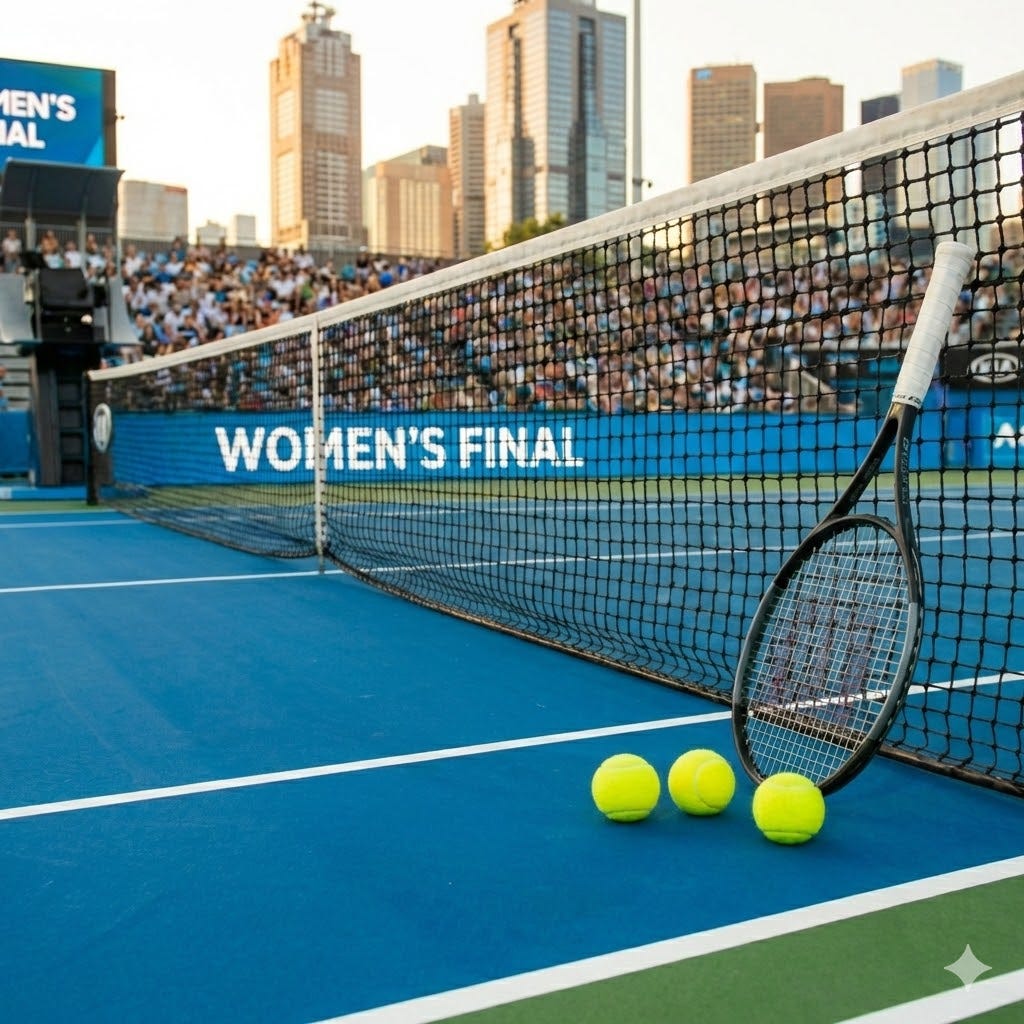
But Sabalenka has more total Grand Slam final appearances and if we ignore some inconsistency (mostly attributable to emotions/psychology + failure to modify strategy relative to opponent), Sabalenka is clearly superior. Overall, Sabalenka has been more consistent all-around (Slams + non-Slams)… but relative to her skill level I think she’s been less consistent.
Sabalenka is 6’0, 176 lbs and looks like an Amazon Warrior-type woman. I’d guess about 2-3x as strong as most women on the WTA circuit with far greater power.
What about Rybakina? Rybakina has been really damn good in recent years but has random hangups. She’ll look like an absolute sniper and seems borderline-unbeatable when she gets in a good rhythm. Rybakina is deceptively tall (also 6’0) because she's thinner-framed (~159 lbs.) and she can rip the ball.
An issue with both Rybakina and Sabalenka goes as follows…
This is common with many on the women’s circuit and is a combination of coaching and strategy. Many are afraid to: (1) take a little power off their shots and (2) give themselves a little more margin of error on line shots — if they are missing snipers.
I’ve seen many women “beat themselves” more than the opponents beat them. They have a pronounced lead and essentially donate games, sets, and sometimes entire matches because they want to prove that they can power-snipe every shot on a dime down the line or ace every serve… when if they’d just chill out and play out some points, they’d win easily in 2 sets.
Both Rybakina and Sabalenka fit this pattern. Often times they’ll get frustrated and double-down… then they’ll connect and one will land in on the line and they’ll think they’ve got their mojo back… so they keep going and the unforced errors keep racking up… they beat themselves and lose or make matches way closer than they ever should’ve been.
They’ve each choked away Grand Slam tournament matches that they could’ve won many times over by being comfortable just hitting the ball a couple inches more inside the lines (sides + baseline)… but for whatever reason they feel like they have to prove themselves that they can power-crush snipers down the line or right on the baseline even when up big… then they start missing their snipe blasts, work themselves up into a tizzy, and either choke the match away or barely win when they could’ve dominated by reducing power/precision slightly… they get borderline robotic with this mentality… looks like a form of brain lock… or like they are trying to prove they are just like the men or something… who knows? They should just calm down, give themselves a bigger margin for error and take a little pace off their shots.
Do I have a preference in the ‘26 AO Women’s Final? I like Sabby a little more just because I’ve watched more of her matches. I have watched some of Rybakina but yeah… Sabby seems down-to-earth and friendly. Either way hopefully a good final.
Australian Open 2026 Women’s Final: Sabalenka vs Rybakina
World No. 1 Aryna Sabalenka and No. 5 Elena Rybakina will meet for the Australian Open title on Saturday, January 31st at 7:30 p.m. local time (AEDT) at Rod Laver Arena in Melbourne. That translates to 8:30 a.m. GMT, 3:30 a.m. ET, or approximately 2:30 a.m. CT for American viewers.
Interesting fact: This is a rematch of the 2023 AO Final. In 2023, Sabalenka won 2 sets to 1 after losing the first set 4-6 (battled back and won 6-3, 6-4 in the latter 2 sets). This is their second AO final meeting.
Both players reached the championship match without dropping a single set—a 12-0 set count each through six rounds.
Prize Money and Stakes
The 2026 Australian Open offers record prize money:
Champion: AUD $4.1 million (a new record for the tournament)
Runner-up: AUD $2.15 million
Winner’s ranking points: 2,000
Finalist’s ranking points: 1,300
Road to the Final
Both finalists have been dominant, but their paths tell different stories about the challenges they’ve faced and overcome.
Sabalenka’s Path (6-0 in matches, 12-0 in sets)
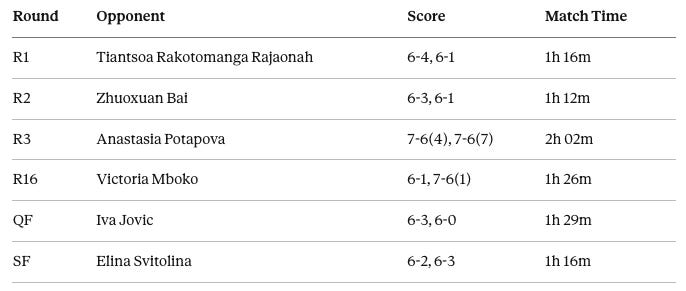
Sabalenka opened with comfortable wins over Rakotomanga Rajaonah (6-4, 6-1 in 1 hour 16 minutes) and Bai (6-3, 6-1 in 1 hour 12 minutes).
Her third-round match against Potapova was her toughest test—a 2-hour battle requiring two tiebreaks at 7-6(4), 7-6(7).
She faced another tiebreak against Mboko in the fourth round (6-1, 7-6(1) in 1 hour 26 minutes) before dispatching Jovic 6-3, 6-0 in the quarterfinals.
Her semifinal against Svitolina was her cleanest knockout-round performance: 6-2, 6-3 in just 1 hour 16 minutes.
Total tiebreak sets played: 3 (twice against Potapova, once against Mboko)
Total time on court through semifinal: 8 hours 41 minutes (calculated from WTA match notes: 7 hours 25 minutes through quarterfinals plus 1 hour 16 minutes in the semifinal)
Critical note on opposition quality: According to WTA’s final preview, Sabalenka did not face a single top-10 opponent in her first six rounds. This is significant context when evaluating her dominance—she hasn’t yet had to solve an elite-level returner or defender this fortnight. (We already know she can beat elite players… the question is whether lack of T10 competition matters and if it helps or hurts her… sometimes an easier path = fresher… other times = less warmed-up for the higher-stakes).
Rybakina’s Path (6-0 in matches, 12-0 in sets)
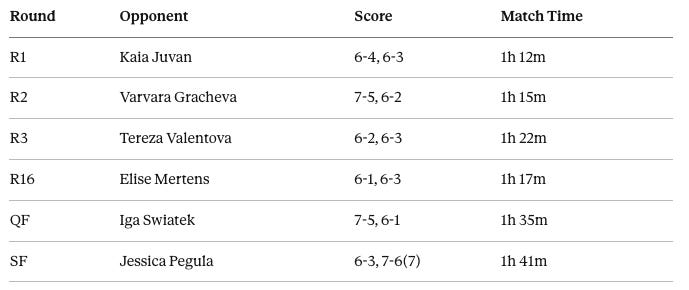
Rybakina’s early rounds were efficient: Juvan (6-4, 6-3), Gracheva (7-5, 6-2), Valentova (6-2, 6-3), and Mertens (6-1, 6-3)—all in under 1 hour 25 minutes each.
Her tournament transformed in the quarterfinals when she defeated world No. 2 Iga Swiatek 7-5, 6-1 in 1 hour 35 minutes.
The 7-5 first set indicates she had to win a real set under pressure before pulling away.
Her semifinal against Jessica Pegula was the most dramatic match of either finalist’s tournament. At 101 minutes, it was her longest match, and Pegula saved match points before Rybakina finally closed in a second-set tiebreak 7-6(7). This was a legitimate pressure test under high stakes.
Total tiebreak sets played: 1 (against Pegula in the semifinal)
Total time on court through semifinal: 8 hours 22 minutes (calculated from WTA match notes: 6 hours 41 minutes through quarterfinals plus 1 hour 41 minutes in the semifinal)
Critical note on opposition quality: Rybakina beat both Swiatek (world No. 2) and Pegula (world No. 3) in straight sets to reach the final. This gives significant confidence that her level is “final-ready” because she has already sustained elite performance against the very top of the draw.
Court Time Comparison

Sabalenka has spent approximately 19 minutes more on court than Rybakina through the semifinals.
That’s not a meaningful fatigue gap by itself, but it pairs with an important qualitative difference: Rybakina’s semifinal was notably tighter (multiple match points saved, late pressure), while Sabalenka’s was shorter and cleaner.
Sabalenka faced more tiebreak sets overall (3 vs 1), but Rybakina had the higher-stakes late wobble in her semifinal closing sequence.
Tournament Statistics Entering the Final
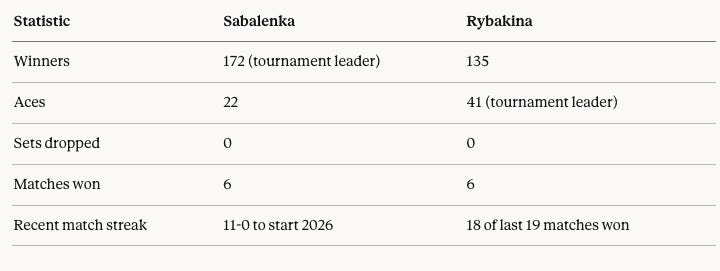
Sabalenka leads the entire tournament with 172 winners entering the final—a clear indicator of her first-strike aggression. She has generally imposed her power tennis more consistently, even in rallies that start neutral. Her 11-0 start to the 2026 season includes successfully defending her Brisbane title.
Rybakina leads with 41 aces in Melbourne—a structural advantage on fast hard courts that gives her a high floor even when her return game struggles. The WTA flagged her as the ace leader earlier in the event (35 through the quarterfinals), and she’s added 6 more in her semifinal. Her momentum entering the final is remarkable: she has won 18 of her past 19 matches.
Head-to-Head Record
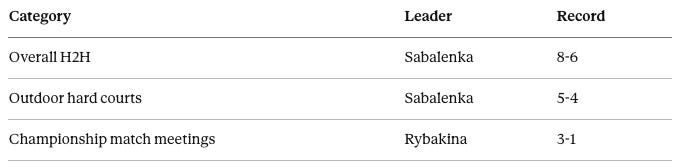
The overall head-to-head favors Sabalenka 8-6 across all surfaces and conditions. On outdoor hard courts specifically—the surface and setting of this final—Sabalenka leads 5-4.
However, the critical contextual factor is their record in finals: Rybakina has won 3 of their 4 championship-match meetings, including their most recent final.
The H2H being close, combined with the finals split favoring Rybakina, is precisely why this is not a “Sabalenka should roll” final even if she’s the betting favorite.
Four Most Recent Meetings (Newest to Oldest)
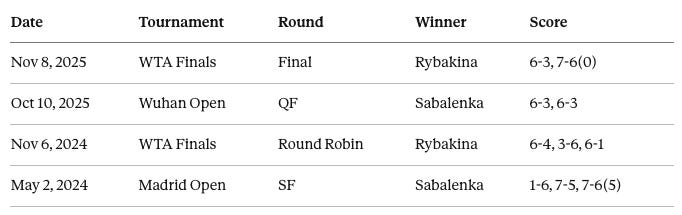
Their most recent meeting was the 2025 WTA Finals championship match, where Rybakina won 6-3, 7-6(0)—a dominant tiebreak performance to close the season-ending title.
Before that, Sabalenka won their Wuhan Open quarterfinal 6-3, 6-3 in October 2025.
At the 2024 WTA Finals, Rybakina won a three-setter 6-4, 3-6, 6-1. And their 2024 Madrid Open semifinal was an epic: Sabalenka came back from a set down to win 1-6, 7-5, 7-6(5).
Their 2023 Australian Open final: Sabalenka won 4-6, 6-3, 6-4—also a three-setter with momentum swings.
The pattern across these matches is unmistakable: scorelines flip quickly, third sets are common, and both players are capable of winning under pressure.
This matchup is typically decided by two factors: (1) who protects serve under pressure, and (2) who keeps their “redline aggression” inside the margins for longer stretches.
Styles of Play
Both Sabalenka and Rybakina are first-strike, power-baseline players—big serving, big returns, and a shared philosophy of ending points early rather than constructing through extended rallies. This is partly why their matchups always produce fireworks.
Sabalenka plays power-forward “take-over-the-point” tennis. She attacks second serves aggressively, aims for a high winner count, and her hard-court results reflect how well this translates on fast surfaces. Her tournament-leading 172 winners demonstrate this identity in action.
Rybakina hits flatter and deeper with a calmer, lower-variance demeanor despite equally massive shot-making. Her game is heavily serve-centric—she generates substantial free points off her delivery, which allows her to hold even when her return game is struggling. The 41 aces in Melbourne aren’t noise; they’re a structural feature of how she wins.
Grand Slam Finals Record

Sabalenka enters her 8th career Grand Slam final with a 4-3 record in completed championship matches.
Rybakina enters her 3rd career major final with a 1-1 record.
Sabalenka’s Recent Major Results
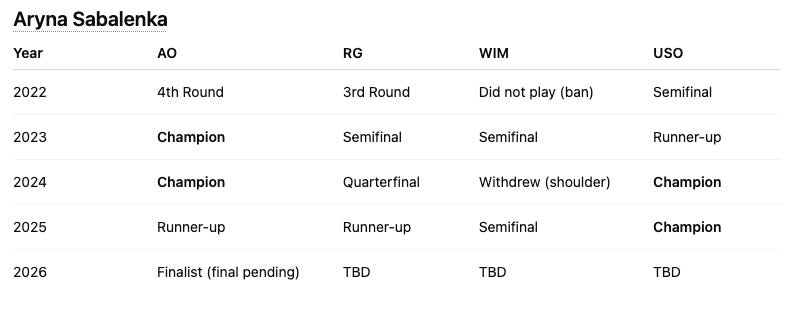
Sabalenka’s Slam resume over the past two years is extraordinary. She won the 2024 Australian Open and 2024 US Open.
In 2025, she reached the Australian Open final (losing to Madison Keys), the Roland Garros final (losing to Coco Gauff), the Wimbledon semifinals, and won her second consecutive US Open (defeating Amanda Anisimova in the final).
This is her fourth consecutive Australian Open final—an exceptional run of consistency at Melbourne Park.
Rybakina’s Recent Major Results
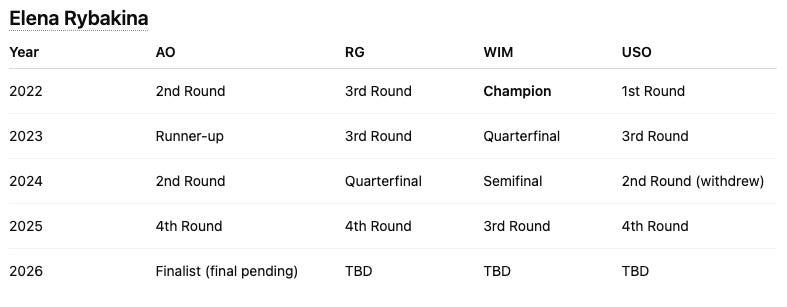
According to Wikipedia, Rybakina’s 2025 Slam results were inconsistent: fourth-round exits at the Australian Open, Roland Garros, and US Open, plus a third-round loss at Wimbledon.
However, her late-season form was elite—she won the 2025 WTA Finals, the season-ending championship, signaling a return to peak performance. Her Melbourne run—including straight-set wins over Swiatek and Pegula—confirms that form has carried into 2026.
Conditions and Scheduling
Session: Night match at Rod Laver Arena (7:30 p.m. local AEDT)
Melbourne weather forecast for Saturday: Mild-to-warm, around 25°C (78°F) high with mostly cloudy skies; approximately 18°C (64°F) low in the evening.
Practical implications: Heat stress is unlikely to be the defining factor unless conditions change materially or roof closure alters humidity. In typical night-session conditions at Rod Laver Arena, both players’ first-strike patterns (serve + 1, return + 1) should translate cleanly.
Rest and scheduling: Both players competed in Thursday semifinals and have Friday completely off before Saturday’s final—effectively equal scheduling with no advantage to either side.
Freshness Comparison

Sabalenka’s semifinal against Svitolina was 25 minutes shorter and emotionally/mentally less taxing than Rybakina’s battle with Pegula.
If marginal freshness matters, the edge goes to Sabalenka—though the Friday rest day likely neutralizes most of this.
Momentum narratives: Rybakina carries the “I beat Swiatek and Pegula and I just won our last final” storyline. Sabalenka carries the “this is my tournament; I’m playing to my baseline identity every round” narrative, backed by her massive recent success at Melbourne (four straight finals).
Betting Odds and Market Analysis
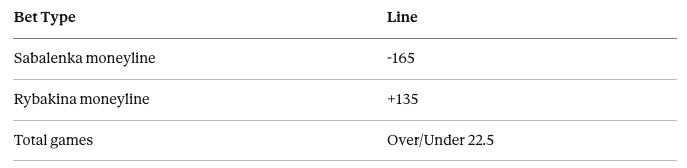
Current lines from DraftKings, per CBS Sports:
Implied Win Probabilities

The -165 line implies roughly 62.3% win probability for Sabalenka before adjusting for the bookmaker’s margin.
After removing the vig, the market essentially prices this at approximately 59% Sabalenka vs. 41% Rybakina.
The market is saying: Sabalenka is the better bet to win, but this is still a real fight—not a mismatch.
The Case for Sabalenka (-165)
Tournament-leading winners (172) indicate sustained first-strike dominance
Melbourne-specific comfort: This is her fourth consecutive Australian Open final; she’s repeatedly thrived here
Superior Slam-winning resume: 4 major titles vs Rybakina’s 1
Slight freshness edge: Shorter, cleaner semifinal
The “Smart Money” Contrarian Case for Rybakina (+135)
There’s a reasonable argument that Rybakina offers value at +135:
The head-to-head is genuinely tight (8-6), and Rybakina has been strong in their finals—winning 3 of 4 championship matches including their most recent title meeting at the 2025 WTA Finals.
Her serve and ace output (41 aces) provides a high floor on fast courts. Even if her return game struggles, she can protect serve under pressure and generate free points when it matters most.
She has already beaten elite opponents in Melbourne. Straight-set wins over world No. 2 Swiatek and world No. 3 Pegula prove her level is final-ready. Sabalenka hasn’t faced that caliber of opposition yet this fortnight.
Exceptional recent momentum: 18 of 19 matches won entering the final, plus the WTA Finals title to close 2025.
Is There an Edge?
If you’re hunting for a betting edge, it comes from disagreeing with the market’s assessment of true win probability.
The cleanest “edge” would only exist if you strongly believe either:
Rybakina’s serve and flat hitting will make this closer to a 50-50 match (making +135 a value play), OR
Sabalenka’s Melbourne dominance makes her materially more likely than ~60% (making -165 worthwhile despite the juice)
My assessment: There isn’t an obvious “free money” angle. The market price looks broadly consistent with the available form and head-to-head data. The game total of 22.5 suggests bookmakers expect a tight match with potential for three sets—which aligns with their historical pattern against each other.
Who Is Playing at a Higher Level Right Now?
This depends on how you define “level.”
If you define level as repeatable point control (serve + first strike + finishing): Sabalenka looks slightly higher. She has more winners, fewer scoreboard scares in her last two rounds, and a shorter semifinal. Her baseline identity—aggressive, first-strike tennis—has been functioning cleanly throughout the fortnight.
If you define level as proving it against elite resistance: Rybakina has the stronger resume this fortnight. Straight-set wins over Swiatek and Pegula are more impressive than anything Sabalenka has been asked to do, because Sabalenka’s draw didn’t include a top-10 opponent before the final.
Overall assessment: It’s close. Sabalenka has a narrow edge on “sustained dominance,” while Rybakina has a narrow edge on “testedness.”
Prediction
Pick: Sabalenka to win
Estimated probability: ~58% Sabalenka / 42% Rybakina (moderate confidence)
Most likely scoreline: Sabalenka in 3 sets, with tiebreak(s) very much in play
Why Sabalenka Wins
More consistent first-strike pressure: The tournament-leading 172 winners reflect her ability to dictate points from the first ball.
Melbourne-specific comfort and track record: Four consecutive Australian Open finals. She’s repeatedly reached the championship match here and is playing cleanly again.
Slight freshness edge: Shorter semifinal, marginally less total court time, and less emotional expenditure in her path to the final.
Superior Slam-winning pedigree: Four major titles and a 4-3 finals record provide experience under the highest pressure.
Why Rybakina Can Absolutely Win
Her serve can decide the match: 41 aces so far is not noise—it’s a structural advantage on quick hard courts that can neutralize even elite returners.
The head-to-head is genuinely tight, and she’s been particularly strong in their finals (3-1), including winning their most recent title match at the 2025 WTA Finals 6-3, 7-6(0).
She’s already proven she can beat elite defenders and returners this fortnight: Swiatek and Pegula are tougher tests than anyone Sabalenka has faced in Melbourne.
Exceptional recent momentum: 18 of 19 matches won entering the final, plus a WTA Finals title to close 2025.
The Bottom Line
The instinct that Sabalenka should win—based on her power, best-of-three format, and Melbourne conditions—matches market logic.
But this is not a mismatch. If you think it is, you probably aren’t familiar with Rybakina’s game.
It’s priced like a competitive power-vs-power final for a reason. Expect the match to go three sets, expect tiebreaks, and expect the outcome to hinge on who holds nerve in the biggest moments.
Both players are capable of winning this match; Sabalenka simply has slightly better odds of doing so.
Match time: Saturday, January 31, 2026 7:30 p.m. AEDT (Melbourne) | 8:30 a.m. GMT | 3:30 a.m. ET | 2:30 a.m. CT
Broadcast: Check local listings for ESPN, Eurosport, and other regional carriers.